
The short answer
If your AC is blowing warm air, running nonstop, leaking water, icing up, or making new noises, it needs a diagnosis before a small problem becomes a bigger one. We find the cause, explain your repair and replacement options, and show you the cost before any work begins.
When your air conditioner stops keeping up, the house can get uncomfortable fast, especially in the valleys and inland neighborhoods, where summer afternoons run much hotter than near the coast. Royal HVAC Solutions repairs central air conditioners, heat pumps, and ductless systems for homeowners in Los Angeles and nearby cities. This page covers the warning signs worth acting on, what our technicians check during a visit, how we think about repair versus replacement, and what shapes the cost of a repair, so you know what to expect before anyone arrives.
Signs Your Air Conditioner Needs Repair
Most AC problems give some warning before a full breakdown. Catching them early often means a simpler repair and less time without cooling. Schedule service if you notice any of these:
Fall Santa Ana winds can bring hot, dry spells after you've stopped thinking about cooling, so a system that struggled at the end of summer is worth checking before you need it again. If you smell burning or the breaker keeps tripping, turn the system off at the thermostat and leave it off until a technician looks at it.
- Air from the vents feels warm or only slightly cool
- The system runs constantly, but the house never reaches the set temperature
- Weak airflow at some or all of the registers
- Ice on the refrigerant lines or the indoor coil
- Water pooling around the indoor unit, or a drain line that backs up
- Grinding, squealing, buzzing, or banging from either unit
- The outdoor unit hums, but the fan doesn't spin
- Short cycling, where the system turns on and off every few minutes
- The breaker trips when the AC starts
- Musty or burning smells coming from the vents
- Electric bills climbing without any change in how you use the system
What We Check During an AC Repair Visit
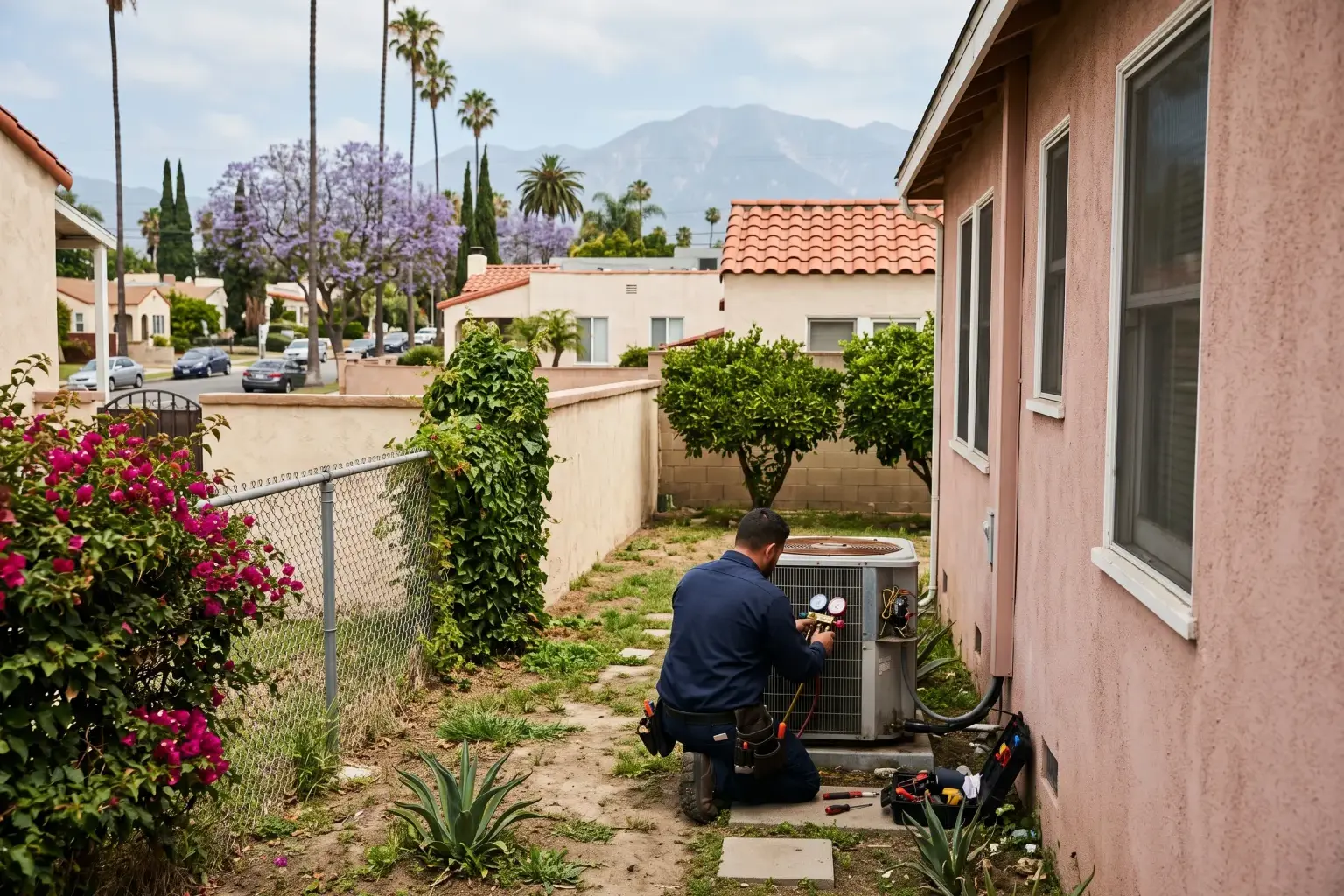
We start with the problem you describe, but we look at the whole system, because one failing part often puts strain on others. A typical diagnosis covers:
If we find a refrigerant leak, we track down where it's coming from instead of simply adding refrigerant. Topping off a leaking system only buys a short stretch of time before the same problem comes back.
- Thermostat settings, wiring, and batteries
- Air filter condition and return airflow
- Capacitors, contactors, and electrical connections at the outdoor unit
- Condenser fan motor and compressor operation
- Refrigerant pressures and signs of a leak, such as oily residue or frost
- Condition of the evaporator coil and the condenser coil
- Condensate drain line, drain pan, and safety float switch
- Indoor blower motor and fan operation
- Visible ductwork for disconnected, crushed, or leaking sections
Repair or Replace: How to Decide
Many AC problems are straightforward fixes, such as a failed capacitor, a clogged drain line, a worn fan motor, or a dirty coil. When the repair is reasonable and the rest of the system is in decent shape, repairing usually makes sense.
Replacement deserves a closer look when the compressor or coil fails on an older system, when the unit uses an outdated refrigerant that's harder to service, when repairs have become frequent, or when parts of the home never stay comfortable no matter what gets fixed. We'll lay out both paths and explain the tradeoffs. The decision is yours.
If you're weighing a replacement, a few things are worth knowing:
- LADWP residential electric customers can apply for rebates on qualifying heat pump systems, with the amount based on the unit's SEER2 and HSPF2 efficiency ratings. The application is filed after the equipment is purchased and installed, within 12 months of purchase.
- Many homes outside the City of Los Angeles are served by Southern California Edison rather than LADWP, so available rebates depend on your address. We confirm the current offer before quoting it.
- The federal Energy Efficient Home Improvement Credit only covered qualifying heat pumps placed in service before December 31, 2025, so it isn't available for new installations now.
- If your AC shares a system with a gas furnace you're also thinking of replacing, South Coast AQMD rules limit emissions from new furnaces in the region and have been moving toward zero-emission requirements. Check the current compliance dates before you decide.
What Affects the Cost of an AC Repair
No two repairs are exactly alike, and you'll see the cost of the recommended work before anything begins. The main factors are:
If a repair doesn't make sense for the age and condition of your system, we'll tell you plainly.
- Which part failed, since a small electrical component is a very different job than a compressor or coil
- Whether a refrigerant leak has to be located and repaired
- The refrigerant your system uses and how much it needs after a repair
- Access to the equipment, because attics, crawlspaces, rooftops, and tight side yards take more time
- System type and brand, which affect part availability
- Whether more than one component has failed or been damaged
How an AC Repair Visit Works
Before we arrive, check that the thermostat is set to cool, replace the air filter if it's dirty, and make sure the breakers for both the indoor and outdoor units are on. Those quick checks sometimes solve the problem, and they help us diagnose faster when they don't.
Here's what happens from there:
- Scheduling: Tell us what you're noticing, when it started, and what type of system you have if you know.
- Diagnosis: The technician listens to your description, then inspects and tests the system to find the cause.
- Options: We explain what we found in plain terms, show you the cost, and walk through repair and replacement choices when both apply.
- Repair: With your approval, we make the repair. If a part has to be ordered, we schedule a return visit.
- Testing: We run the system and confirm it's cooling and draining properly.
- Wrap-up: We share anything else we noticed and simple steps that can help prevent the same problem.