
The short answer
Duct cleaning is worth it when you see dust blowing from vents, notice a musty smell, find signs of pests or mold, or have just finished a remodel. Royal HVAC Solutions inspects your ducts first, then recommends cleaning, repair, or replacement based on what we find.
Your ducts carry all the air your heating and cooling system moves through the house. In Los Angeles, that air picks up a lot along the way: fine dust from long, dry summers, grit blown in during fall Santa Ana wind events, pet hair, and debris from remodeling projects. Royal HVAC Solutions cleans and inspects duct systems for homeowners in Los Angeles and nearby cities. We look at the whole system, not just the vents you can see. Then we tell you whether your ducts need cleaning, sealing, repair, or replacement, and why.
Signs Your Ducts Need Cleaning
Most homes don't need duct cleaning every year. It makes sense when there's a specific reason, and we'll tell you that up front. These signs usually justify a closer look:
Inland and valley neighborhoods get much hotter in summer than areas near the coast, so air conditioners there run longer and pull more air and dust through the ducts. Homes closer to the coast may run their systems less often, but dust can still settle in the ducts for months between uses.
- Visible dust or debris blowing out of supply registers when the system starts
- Dust settling on furniture again within a day or two of cleaning
- A musty or stale smell when the heat or air conditioning runs
- Signs of mold on registers, inside duct openings, or near the air handler
- Evidence of rodents or insects in the attic, crawlspace, or ductwork
- Recent remodeling, drywall work, or sanding while the system was running
- Smoke or ash that got into the house from nearby wildfires
- Filters that clog much faster than they used to
What We Check During a Duct Inspection
Cleaning only helps if the system is in good enough shape to stay clean. Before we clean anything, we inspect the ductwork and the equipment connected to it. Where we can't see directly, we use a camera, and we show you what we find.
A dirty evaporator coil or blower can coat freshly cleaned ducts with dust again quickly. If those parts need attention, we let you know.
- Supply and return registers, grilles, and the boots that connect them to the ducts
- Duct runs in the attic, crawlspace, or garage that are crushed, kinked, or disconnected
- Flex duct condition, including tears, sagging, and worn outer jackets
- Insulation on ducts that run through hot attics
- Seams and joints that leak air
- The return side, including where the filter sits and how well it fits
- The blower, evaporator coil, and air handler cabinet for dust and buildup
- Signs of moisture, mold, or pest activity
Clean, Repair, or Replace?
Cleaning doesn't solve every duct problem. After the inspection, we explain which option fits your system.
Cleaning is the right choice when the ducts are structurally sound but dirty. That means sheet metal or flex duct in decent condition with dust, debris, or construction residue inside.
Repair makes sense when the problems are limited to specific spots, such as a disconnected run in the attic, a crushed section, leaky seams, or a damaged boot. Sealing and reconnecting these spots can improve airflow to rooms that never seemed to heat or cool properly.
Replacement is worth discussing when flex duct is old and brittle, insulation is falling apart, mold or pest contamination is widespread, or the duct layout was never sized correctly for the equipment. Cleaning ducts in poor condition can damage them further, and cleaning won't fix a bad design.
If you're also planning to replace your furnace or air conditioner, it often makes sense to look at the ducts at the same time. If you're considering a new gas furnace, check the current South Coast AQMD rule first. The district limits emissions from furnaces sold and installed in the region and has been amending the rule toward zero-emission requirements. If you're considering a heat pump, LADWP customers may qualify for a rebate based on the unit's efficiency rating. Homes served by Southern California Edison have different programs, and we confirm what applies to your address before quoting it. The federal 25C tax credit for heat pumps is no longer available for new installations.
What Affects the Cost of Duct Cleaning
We give you a clear quote after we've seen your system. These are the main factors:
If we find something during the job that changes the scope, we tell you and get your approval before doing the added work.
- Home size and the number of supply and return vents
- How many HVAC systems the home has
- Where the ducts run and how easy they are to reach, such as an attic, a crawlspace, or between floors
- Duct material and condition
- How much buildup or debris is inside
- Whether mold or pest contamination needs extra treatment and cleanup
- Whether the coil, blower, or other equipment also needs cleaning
- Any repairs, sealing, or duct sections that need replacing
How a Duct Cleaning Visit Works
Here's what to expect when we come out:
Most visits take anywhere from a few hours to most of a day, depending on the size of the home and the condition of the ducts. Your heating and cooling will be off while we work, so in summer it helps to schedule during a cooler part of the day.
- We ask what you've noticed, such as dust, smells, uneven temperatures, or recent work on the house.
- We inspect the registers, ductwork, and air handler and show you photos or camera footage.
- We explain what we recommend and give you a written quote before we start.
- We cover floors and furniture near the work areas.
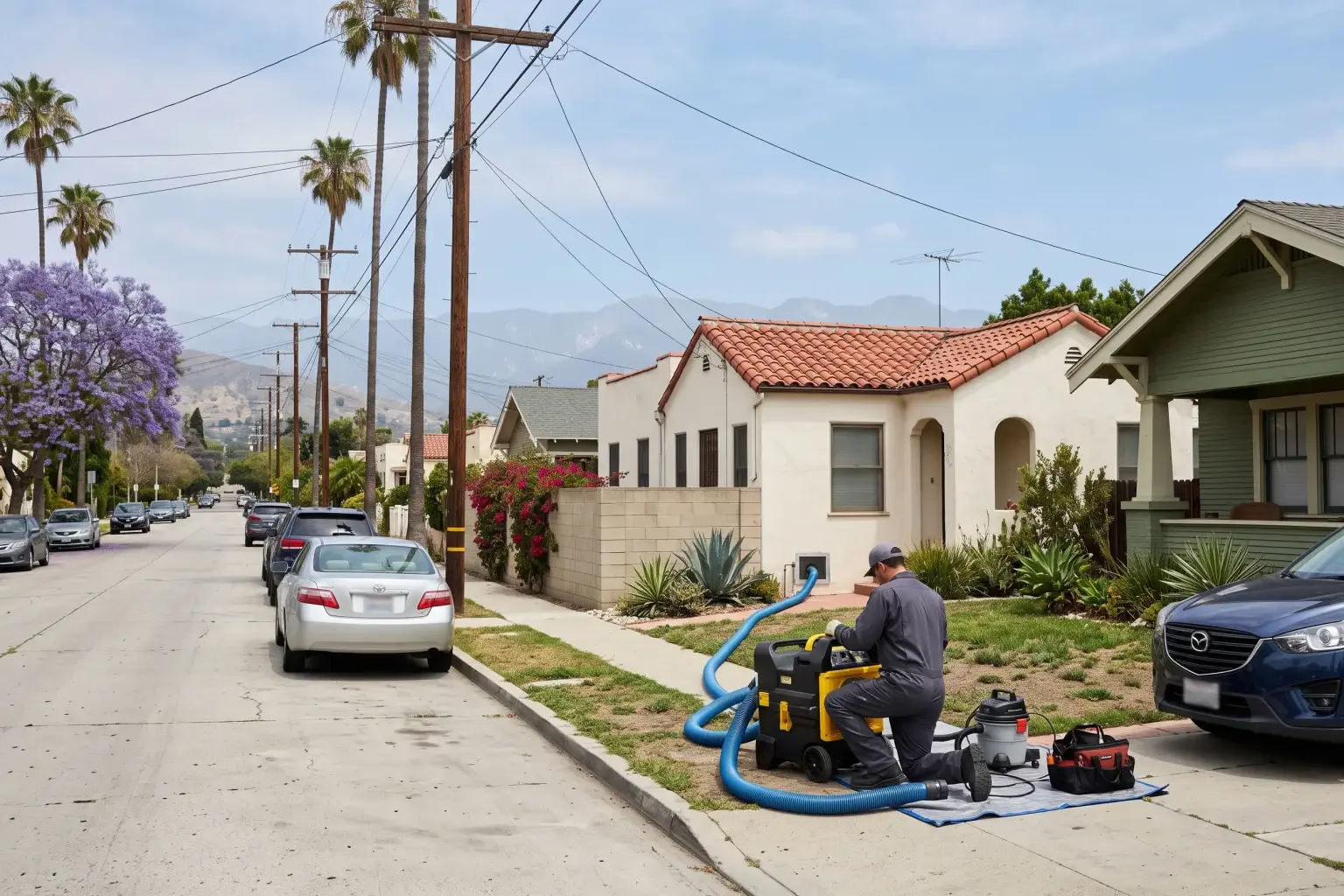
- We connect negative-pressure equipment to pull debris out of the system while brushes and air tools loosen buildup inside the ducts.
- We clean the registers and grilles, plus the blower and coil if they're part of the job.
- We replace the filter and run the system to check airflow.
- We walk you through what we did and what to watch for.